About The Author


Clean Room Flooring Types
The bulk of the contamination in a Cleanroom resides on the floor. It is important that consideration be given to the best flooring solution for your application.

Clean Room Flooring Systems
Clean rooms are highly sophisticated buildings that fulfill crucial functions for highly sensitive processes. Clean room design and construction is now a special segment of the building industry and accounts for the specification and installation of an ever increasing amount of interior surface finish material. A clean room is a specialized enclosure that establishes an environmentally controlled space where airborne particles, microbes, temperature, humidity, airflow, and other elements are carefully regulated. Clean rooms are no longer used just in the aerospace industry. Today clean rooms are built wherever contamination control is important: pharmaceutical and medical technology labs and production areas; semiconductor, computer, and communication system assembly and testing facilities; optical, biotechnology, food and drink processing plants.

Pharmaceutical Flooring
The pharmaceutical industry is on the cutting edge of scientific progress and research, working around the clock to develop, test, and produce medications and treatments that improve the health outcomes and quality of life for patients across the globe. As pharmaceuticals are such a sensitive and precise science, great care must be taken to ensure that every aspect of the facilities involved, at every step in the process, is designed to protect cleanliness and avoid the risk of contamination. The type of flooring system installed could not be more important than in this industry.

Pharmaceutical Industry Flooring
The pharmaceutical industry is on the cutting edge of science, transforming our lives in previously unimaginable ways. The right high-performance pharmaceutical flooring is essential for production plants, research and development labs and other facilities in maintaining their strict hygiene and safety protocols.

Flooring made easy
Flooring can be at the bottom of the ladder when planning a new cleanroom. As contamination has a downward flow it is an element not often given as much consideration as those featuring higher in the cleanroom; wall construction, for example. But, a non-cleanroom compliant floor could introduce and harbour contamination to the environment thus putting manufacturing processes at risk.
“The choices and the technology out there in the market are growing,” says Rebecca Smith, national territories manager at Connect 2 Cleanrooms. Smith believes it is important to consider flooring right at the beginning of the cleanroom planning stage, so the correct type is selected. She points out that considerations including GMP requirements, the existing flooring, process compatibility, cleaning protocol and cleanroom type will drive the selection decision.
There are two main cleanroom flooring options, namely loose lay flooring and vinyl flooring. Each has many variants, bringing its own benefits and opportunities. Smith comments: “Both types are available in multiple colours, meaning areas can be colour coded to signal separate zones within the cleanroom, or pathways can be created to signpost operatives.”

Cleanroom Flooring
The bulk of the contamination in a Cleanroom resides on the floor. It is important that consideration be given to the best flooring solution for your application.

Cleanroom VCT Flooring Design
Vinyl Composite Tile (VCT) is a durable flooring material for ISO 7 and ISO 8 cleanrooms. VCT’s reputation for easy cleaning, resilience, and durability is a well-received cleanroom flooring option, but also popular in healthcare facilities, government, and education.
There are a few final preparations required before the final cleanroom flooring installation.

Cleanroom ESD Flooring
Selecting the right kind of ESD (electrostatic discharge) flooring is always a challenge, and in controlled environments, the stakes are particularly high.
While cleanroom environments are known for the exacting standards used to control contaminants, it's ironic that their anti-static flooring doesn't always meet industry specifications. This is a critical concern on several levels:

Cleanroom and ESD requirements
A cleanroom is a controlled environment where products are manufactured. It is a room in which the concentration of airborne particles is controlled to specified limits.
Ecotile’s MD, James Gedye, explains the proposed ISO Standards for Cleanrooms and how Ecotile’s Industrial and ESD Flooring can provide your organisations’ with a simple and reliable solution that fully supports your Cleanroom requirements.
Eliminating sub-micron airborne contamination is really a process of control. These contaminants are generated by people, process, facilities and equipment and must be continually removed from the air. The level to which these particles need to be removed depends greatly upon the standards required for each organisation.

The right cleanroom door
Choosing the right cleanroom door can be tricky, however the cleanroom design and build experts, Kleanlabs, are here to help. Below are 10 things they believe every customer should consider before choosing a cleanroom door

Choosing Your Cleanroom Door
One of the biggest challenges in designing cleanroom doors for the pharmaceutical industry is creating a sturdy door with a high hygienic performance that is light and easy to clean. These factors need to be considered when designing hygienic doors for all areas, but in a cleanroom environment, one of the most important considerations is the weight of the door. Manufacturing a door that complies with fire regulation can add weight to the initial product, which can make it very difficult to open. The differential air pressures within cleanrooms also exacerbate this problem so it is important to consider whether automated access control needs to be fitted to each door.

Flush-Mounted Cleanroom Windows
Windows give us a view of the environment on the “other” side of the wall, whether looking out from an enclosed room, or looking into it. In a controlled cleanroom, windows are a source of ambient light, and help to “expand” the space, making it feel less restrictive and relieving worker claustrophobia. Practically speaking, they also allow personnel to see when the critical environment is in use, and what activities are being performed.

Cleanroom Windows Cleaning
Windows are among the most essential parts of a well-maintained cleanroom. Here are tips for cleaning windows in your cleanroom.

Modular Cleanrooms Wall Materials
Cleanrooms are controlled environments used in the manufacturing and research of pharmaceuticals or in the assembly of semiconductor and aviation applications. They are designed in a way to have a minimal level of particulate matter like microorganisms, dust, pollutants, and other molecules. The permissible level of these impurities in a room depends on the product being tested or assembled in the room. As the design and form of these cleanrooms need to be altered according to the product being tested, a lot of companies resort to modular building companies to help install a cleanroom, which is flexible in architecture while fulfilling the requirements. Here are a few factors that you need to pay attention to while deciding on a modular cleanroom structure:
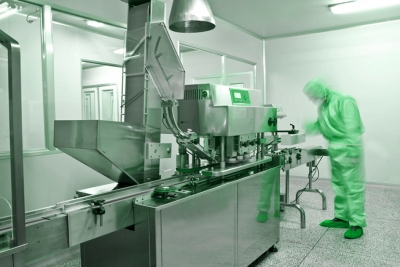
Cleanroom Requirements & Classifications
Cleanrooms are essential to any manufacturing process where particulate contamination can affect the quality of goods produced. Specific clean room classifications and ISO class code descriptions provide protective guidelines and secure environments through controlled air filtration, which lowers the possibility of product contamination or large particulate interference within critical process manufacturing. Specific cleanroom requirements and ISO 14644-1 cleanroom standards are used to protect consumers from any potential flaw or mishandling of a product.

Cleanroom Construction Concepts
Designing and cleanroom construction process focuses on the actual construction process. In the first three installments of this series, we reviewed the standards and guidelines that govern cleanroom design and then looked at the specific systems and components used to maintain the pristine conditions required in a cleanroom.

Successfully Build a Cleanroom
Cleanrooms are a vital part of laboratories and the microelectronics industry, especially semiconductor manufacturing. To maintain and assure quality, there are specific standards that apply to these spaces and guide the process of constructing and operating the rooms. While adhering to these requirements makes designing and constructing a cleanroom more complex than conventional construction projects, the standards serve as a blueprint for the successful completion of a cleanroom that will meet the exacting demands of the end-user.

HVAC cleanroom design calculation
Cleanroom HVAC engineering is not an easy thing. It takes a mix of engineering skills, understanding the particle-generating potential of the process, and experience.

USP Compounding Cleanrooms
Pharmacy compounders have a lot of factors to consider when making the decision to go into the business of mixing individual prescriptions, particularly those considered “hazardous.” It can be a lucrative operation, but one which is closely overseen. For good reason, though: mistakes in the recent past have taught us that sloppy procedures, partly resulting from a lack of regulations, can have deadly consequences.

Fitting lights in cleanrooms
Cleanroom lighting is often an afterthought in cleanroom design, as the primary function of a cleanroom is to reduce contamination. So when identifying the type of light fitting to use, consideration needs to be given not just to the lux levels required for the process, but to how this choice of lighting may affect airflow and filtration.

Understanding Cleanrooms Lighting
It's no mystery that cleanrooms present numerous challenges to designers who specify lighting systems. Cleanroom lighting will vary depending on the room's use, its classification and ceiling air supply configuration. In an ideal situation, lighting systems should provide good visibility and be designed with contamination control issues—electromagnetic field generation and cleanability—in mind. But before that can be achieved, a thorough examination of the basic fundamentals, illumination requirements, available styles and fixture construction must be undertaken.

Basics of Determining Cleanroom Lighting
As with every aspect of a cleanroom, the lighting is extremely important and requires proper cleanability. In order to prevent any type of contamination, the lighting must be bacteria-free.

The Best Lights for Cleanrooms
When you have a cleanroom, you need to keep it well lit and free of contamination. That's where cleanroom lights come in, since they produce the fewest possible contaminants when it comes to lighting. But some cleanroom classifications require so many air system filter panels that there is little room left for lights. If you're not sure which light fixture would even fit in your cleanroom, take a look at your options.

Cleanroom Lighting Design
Lighting is mostly an afterthought in Cleanroom design, as the overall aim is to reduce contamination. Precision is paramount in cleanrooms. Therefore, to prevent contamination, Cleanroom equipment (including lighting) must be installed by Cleanroom professionals, all the while remaining germ-free.
The highly detailed work conducted in cleanrooms requires different requirements for lighting. Cleanroom lighting depends on its classification, as well as the purpose of the Cleanroom and ceiling air supply configuration. Subsequently, lighting should be designed with cleanability, electromagnetic field generation and contamination control issues in mind.

Selecting materials for cleanroom
Choosing which materials to use for a cleanroom construction is increasingly complex due to the wide variety of options now available. Jorge Nuero, Telstar, looks at key considerations for optimising cost and ensuring safety and quality

Right wall material cleanroom
If you’re working on putting together a design for your cleanroom, you’ve likely noticed that there isn’t a ton of helpful information out there. That’s because up until recently, most buyers just hired a contractor they felt they could trust, and left it at that. But if you’re here, it’s likely because you’re a part of the newer generation of buyer: the savvy, researching buyer who wants all the information before you even head to a cleanroom manufacturing pro.

Building A Cleanroom
Everything You Need to Know About Building A Cleanroom: ISO Class Prefab Hardwall Cleanroom Design. Advantages for Modular Hardwall Design and Construction of ISO 14644-4 Cleanrooms.

Cleanroom PVC flooring
Cleanroom Industries Sdn. Bhd. designs and provides a specific supply and installation service, with specialised personnel, for floorings in clean rooms and controlled contamination environments. Various solutions according the specific project requirements: PVC, LVT, or resin floorings. All the products supplied meet all requirements of ISO standards and GMP standards and reduce the risk of contamination from volatile particles, which would compromise production. The floor solutions mainly used in our projects to complete the clean room can be: in PVC or epoxy resin.

Cleanroom flooring made easy
Flooring can be at the bottom of the ladder when planning a new cleanroom. As contamination has a downward flow it is an element not often given as much consideration as those featuring higher in the cleanroom; wall construction, for example. But, a non-cleanroom compliant floor could introduce and harbour contamination to the environment thus putting manufacturing processes at risk.

Modular cleanroom designs
People often come to us for a budgetary price for their cleanroom project without much information about their needs. A cleanroom is an investment and a real asset in a company’s strategy and needs to be well thought through. Many decisions must be taken when building a cleanroom, and these will affect the cleanroom performance, ergonomics and cost. The following 5 questions are, in our opinion the first ones to ask when initiating a cleanroom project.

Cleanroom HVAC Engineering
It is easy to make a room clean if no one is inside, with no equipment, and no material movement. But operations occur in cleanrooms and must be accounted for in the HVAC calculation. Below are some other elements that influence the required airflow.
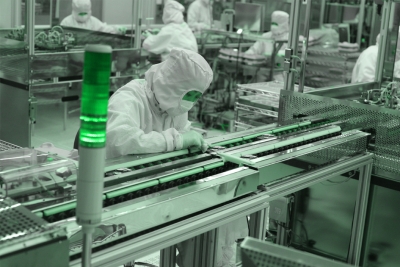
Classification Impacts For Cleanroom
Clients often come to me specifically requesting an “ISO 7 cleanroom” or an “ISO 8 cleanroom.” What they often fail to realize is that the ISO class does not define the layout of the cleanroom. It only defines the cleanliness level that needs to be met. In fact, the ISO classification actually corresponds to a specification of how clean the cleanroom must be. The ISO 14464-1 standard doesn’t say how to design the cleanroom, it only specifies the maximum quantity of air particles allowed.

Modular Cleanrooms Facts
The cleanroom market has grown tremendously in the past 50 years due to increased regulations and the rise of safety concerns. Furthermore, a growing number of companies now choose modular over conventional construction. Here are some facts that you should take into account when considering a cleanroom supplier.

Cleanroom HVAC Designs
The HVAC system is at the heart of the cleanroom. Although many clients are unenthusiastic when broaching the subject, the HVAC system should not be overlooked given its central role. HVAC is actually the most complex and important system of a cleanroom facility as the HVAC is responsible for controlling air cleanliness, temperature, humidity, and pressure. This article aims at simplifying the cleanroom HVAC concept to facilitate conversations with your cleanroom supplier for your next project.

Cleanroom Control and Maintenance
Proper cleanroom cleaning procedure and maintenance protocol is an immediate, low-cost measure to enhance overall cleanliness, consistency, and contamination control within cleanrooms. This guide provides a framework for cleanroom management, protocol standards, specifications, and processes for general manufacturing and biomedical applications. Because each cleanroom class can require slightly different supplies and protocol, this overview connects best practices with application specific techniques for gowning, wipedown, and particle control. This guide should serve as a resource for understanding broad-line cleanroom consumable needs, but not as a replacement for expertise tailored to your application.

Common Cleanroom Contaminants
Some of the most common cleanroom contamination include solid dust, liquid, bacteria, fungus, human skin cells and hair, trace moisture, spills and leaks, cosmetics, perfumes, lint, fibers, and more. The vast majority of cleanroom contamination comes from those that work within it.

Sterile Gloving Technique for Cleanrooms
Cleanroom gloves are worn for one of two reasons: to protect the wearer from exposure to dangerous or irritative substances, and to protect cleanroom products from contaminants introduced through operators, equipment, or airborne particles. Pharmaceutical manufacturers will generally require sterile gloves with cleanroom designated packaging. Standard surgical glove packaging generally uses a polycellulose spunwoven fabric which generates a high count of particles when opened and handled. Cleanroom glove packaging features a polyethylene, easy open packaging which is washed with deionized water, assembled in an ISO Class 4 cleanroom, and then packaged for delivery in an ISO Class 5 Cleanroom.

Cleanroom Cleaning Procedure
A cleanroom is a controlled environment where products are packed, manufactured, and assembled. The room eliminates sub-micron airborne contamination generated from people, processes, facilities and equipment. The higher the level of cleanliness, the lower the likeliness of particles or microbes damaging or corrupting production processes by tainting sterile and non-sterile products.

Reduce Contamination in Cleanrooms
A cleanroom bears its name for a reason: its very purpose is to stay sanitary and free of contaminants to maintain a stable work environment. Because employees handle sensitive equipment and components in these critical areas, keeping contaminants at bay is essential to everyday workflow, and ultimately, maintaining profitability.
It may come as no surprise that your employees are the most common source of contamination in your cleanrooms. What you may find surprising, however, are the simple steps you can take to minimize contamination risks.
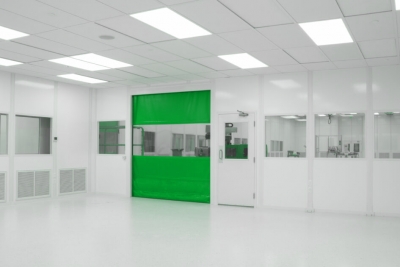
Cleanroom types
Cleanrooms have evolved into two major types and they are differentiated by their method of ventilation. These are turbulently ventilated and unidirectional flow cleanrooms. Turbulently ventilated cleanrooms are also known as ‘nonunidirectional’. Unidirectional flow cleanrooms were originally known as ‘laminar flow’ cleanrooms. The unidirectional type of cleanroom uses very much more air than the turbulently ventilated type, and gives a superior cleanliness. These two types of cleanroom are below.
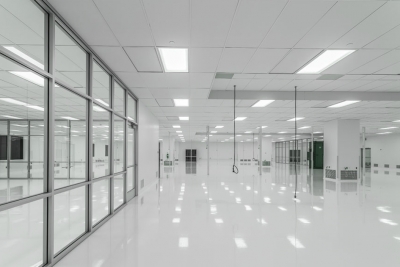
Origin of cleanroom technology
A clean area is a “specified area in which the concentration of airborne particles is regulated and classified, and which has been designed and is being operated appropriately for regulating the introduction, formation and deposition of particles in the area.” (ISO 1464 41-1)

Design cleanroom conditions
For zero-defects with suitably clean production, you must always consider the entire process chain. If one single process link is neglected, process steps lose their effect and the product its quality.

Flexible Cleanroom Design
Designed to accommodate various layouts, sizes and strict or unique requirements, we offer flexibility in our modular cleanroom designs. With hardwall and softwall enclosure options and negative or positive pressure capabilities available, we provide modular products to suit various applications, including medical device manufacturing, assembly and packaging, pharmaceutical compounding and many more. Our cleanrooms are designed to meet specific ISO Classification requirements for ISO Class 3 through ISO Class 8.

The World’s Best Cleanrooms
Cleanrooms are most commonly associated with scientific laboratories, but they’re used in a wide range of applications. In fact, cleanroom technologies are often utilized in manufacturing and computer server production to help support a sterile environment.
The Cleanroom Construction Process
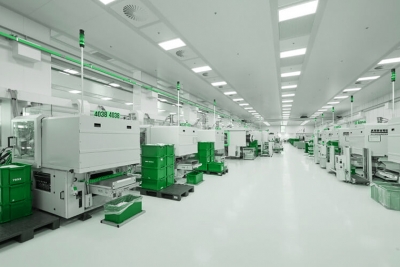
While there are discrete steps in the design and construction of a cleanroom, those projects deemed successful incorporate certain practices that promote flow of the construction process toward completion on time and within budget. Proper front end planning is not completed until it results in appropriate values for design parameters; "buy-in" at all levels of management, and clear direction for the design phase. Engineering the cleanroom in accordance with recognized industry practice would produce construction documents that facilitate clear procurement and construction planning as well as a focused, efficient, construction effort. A full return on the energy expended through the construction phase cannot be realized without a well-executed start-up and certification process that provides baseline data for effective operation and maintenance. This paper describes the steps in the cleanroom design/construction undertaking and offers practical suggestions on how to avoid pitfalls along the way.

Stages of Cleanroom Construction
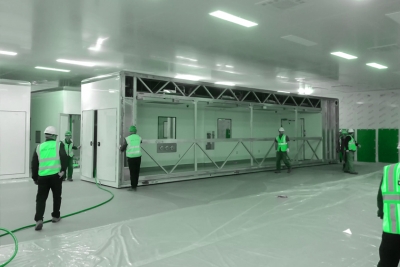
Building out a cleanroom and adjacent environments is a multi-stage construction process and particular protocols must be maintained at each stage of the construction to ensure the integrity of the cleanroom. The stages are:
Cleanroom construction protocols
The work in this Section describes the five levels of clean construction protocols. The sixth level is Tool Hook-up and/or operations and is listed under Tool Hook-up. The five levels listed here are for a guideline and do not necessarily need to be performed in the manner described below. The levels are listed here for informational purposes only, and do not describe the scope of work provided by Protoclean, Inc. The scope of work is outlined in this document outside of this section and the pricing page.

Basic Cleanroom Gowning Procedure
Cleanrooms are typically used in scientific research and manufacturing to provide a controlled environment for handling sensitive components and samples. Cleanrooms are constructed in a way to minimize particles from being introduced, generated or retained inside the room. Depending on the cleanroom classification and application, the gowning procedure may vary. However, the following sequence is basically the same.

Cleanroom Recommended Gowning Protocol
Manufacturers invest hundreds—even thousands—of dollars per square foot of cleanroom space to meet ISO-proscribed particle counts. Shouldn't the same standards be required of the people who enter and potentially contaminate this ultra-clean environment?

Humidity Control for Clean Rooms
Clean Rooms are workplaces where contamination is controlled. The Clean Rooms are said to provide a conducive environment (for research, development and manufacturing of equipment or processes) with a low level of environmental pollutants such as dust, airborne microbes, aerosol particles, and chemical vapors.