About The Author


How to choose Cleanroom Walls
When creating a controlled cleanroom environment, it's important to consider every part of the construction carefully, including the walls, ceilings and floors. Cleanroom walls must be able to keep out contaminants, such as airborne particles, as well as allowing you to create an environment where the air flow, temperature and humidity are controlled.

Cleanroom Ceilings
Your cleanroom is one of the most important parts of your laboratory. This sterile and safe environment protects your experiments from contamination. To obtain the level of control you need over your cleanroom environment, you need to take extreme care when selecting the materials that compose every aspect of the room, from the floor to the ceiling.
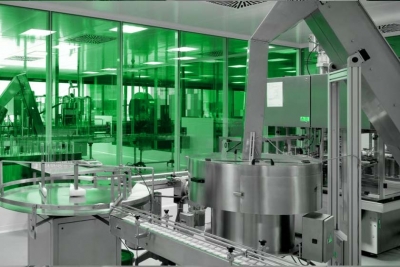
Optimizing Cleanroom High Performance
In today's modern business infrastructure, efficiency and productivity are two major factors that contribute to a company's success. Mirroring the production process of many of the world's top tech companies, manufacturers have also adopted a leaner, more agile way of creating products efficiently.
With that in mind, let's explore the strategies your company can implement to ensure your USP-797 Cleanroom is optimized for the best quality, while still maintaining the highest output possible.

Laminar Flow Hoods
Laminar flow hoods are essential equipment when working with delicate or hazardous materials, such as biological cells or unstable chemicals. Choosing the right laminar flow hood allows scientific researchers to work safely and effectively in the laboratory. Educate yourself about the features of laminar flow hoods so you can choose the right equipment for your laboratory or clean room.

Cleanroom Certification
A cleanroom is an extremely purified region in which temperature the air quality and humidity are kept under strict management. The atmosphere in the cleanroom is filtered to remove other contaminants and dust particles. Cleanrooms are primarily employed for production equipment which is sensitive to contaminants, including hard disk drives, silicon chips, microprocessors and integrated circuits. Cleanroom certification comprises examining the room for assorted parameters, including static electricity, airborne particles, relative humidity, temperature and differential pressure.

Walkable Cleanroom Ceilings
When choosing between the various different cleanroom designs that are available today, you probably give a lot of thought to the space that your employees will be working in. You may consider the walls, features, and perhaps even the floor of your cleanroom, but how much thought have you given to the cleanroom ceiling? Although the cleanroom ceiling is often overlooked, it is an extremely important part of any cleanroom.
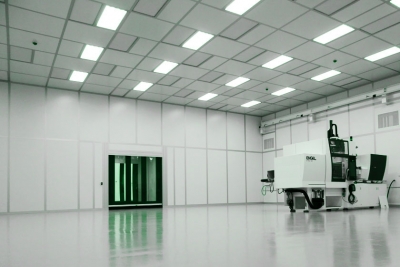
Modular Softwall Cleanrooms
Access to a cleanroom is essential for people working in many industries, from component manufacturing to forensics. A modular softwall cleanroom is an affordable yet effective alternative to hardwall or brick and mortar cleanrooms.

Benefits of a Modular Cleanroom
Modular cleanrooms are becoming increasingly popular in a wide range of industries. Quick to install and easy to maintain, this type of cleanroom can be suitable for many applications, ranging from medical and pharmaceutical work to manufacturing. If you're not sure whether a modular cleanroom design is right for your organization, why not take the time to learn about the benefits of this type of environment? The following could convince you to try out this type of cleanroom in your own company.

Types of Cleanroom Furniture Explained
Space is often at a premium in cleanrooms. As a result, the purchasing and positioning of cleanroom furniture often needs to be planned out meticulously to protect the working environment and ensure accurate project outcomes. The last thing you want is for your furniture to interrupt workflows or risk the introduction of contaminants into your environment. Another important consideration is comfort, especially when you consider the long periods that professionals can spend confined in a cleanroom environment.
In this article we'll take a look at the various types of cleanroom furniture available and the essential features you need to look for when making a buying decision.

Evaluating Flooring for Cleanrooms
Cleanroom floors demand the same kind of special attention required for other details of cleanroom design and construction. Among the criteria for cleanroom floors are:

Alternatives for Cleanroom Flooring
Concrete is an excellent construction material. Pourable and formable, concrete develops into a hard structural material capable of supporting heavy loads and is durable enough to last for many years. But concrete is porous and subject to wear and to attack from corrosive chemicals. Also, it tends to abrade and give off large amounts of dust, while spilled materials tend to seep into and through it. Even with additives to increase hardness and seal the surface, concrete cannot be exposed in cleanrooms. Still, it forms the base for almost all flooring materials that do provide the required characteristics. These materials must be compatible with the concrete substance and must adhere well for long-term durability.

Meeting the Needs of Cleanrooms
Preventing the growth of microorganisms is essential in most cleanrooms that deal with food, biologicals, or pharmaceuticals. The best way to combat contamination is by constructing floors without cracks and holes so microorganisms cannot hide and propagate.

The Need for Durability
While the cost of materials used in cleanroom construction is always a concern, the durability of those materials is far more of an issue because of the high cost of repairs once the cleanroom is in operation. For example, if the flooring cracks or loses its ability to contain spilled chemicals, it may be necessary to tear up the finish, repair the cracks, and install another floor.

Keeping on Track with Cleanroom Floors
To maintain the highest level of clean air, Class 1 and sub-Class 1 cleanrooms generally use vertical laminar air flow systems with perforated, raised access floors. Space between the raised floor and concrete-slab on grade is used as a return air duct and also as a service area for wiring, cable and piping. Perforated panels provide a way to achieve vertical laminar flow conditions while controlling ESD, air flow, particulate contamination and vibration. Floor panels vary according to the application and may include aluminum, fabricated steel, aluminum casting, woodcore, gypsum and cement.

Cleanroom Modular or drywall?
Deciding whether your cleanroom should be modular instead of drywall is not the only decision a project team has to make when considering a cleanroom. In most cases, the choice of panels is not as clear cut as once was the norm.

Modular or drywall which to decide?
One of the first questions is modular or drywall? Modular offers the most flexibility. It will allow you to expand as your business expands. Drywall has its economical advantages but is quite permanent, and can be more expensive if all cost variables are factored in. Let’s look at the details:

Cleanroom Wall panel skins
Wall panel skins are the surfaces of the wall panels that are exposed. Whattype of modular panel skins should your cleanroom be constructed of? To answer this question, you need to assess the purpose of the cleanroom along with how you plan on cleaning your cleanroom. Are you going to use a wet or dry agent or both?

Cleanroom Skin supporting structure
Generally using a system that needs supporting skin structure presents the following pros and cons. It allows the use lower class material not exposed to the clean areas, thus reducing costs. In case of scratches or wall chipping low class material exposed to the environment

Cleanroom insulation
Some modular wall manufacturers’ products include panels without insulation. Avoid use of product that may lead to fumes in case of fire, cost and easier use of wall interior for utilities or electrical wiring.

Single Pass & Recirculating
There’s really not an enormous difference between a single pass and a recirculating cleanroom, it just has to do with the preciseness of how you control the return. In any cleanroom you’re taking the air and you’re pushing it down through the room, and then you’re transferring it out of the room. Now the difference between a single pass and a recirculating cleanroom is what you do with that air once it’s purged out of the room. For instance, are you just going to control the return back to the plenum, or are you going to let that air wash into the surrounding areas? The decision based on which design you use has to deal with the preciseness of your control.
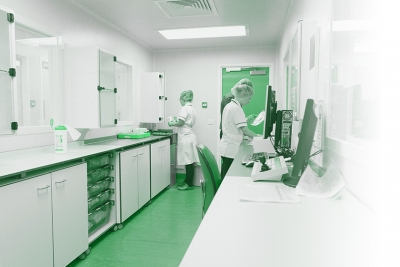
Air Flow Systems
There are basically three different air flow systems in cleanrooms: pressurized plenum, ducted supply and ducted return, and ducted supply and open return. Pressurized plenum essentially means you pump the air into the plenum, push it through the filters and down on into the cleanroom. With a ducted supply and ducted return, you’re doing just that; you’re ducting the air delivered to the cleanroom and you’re ducting the air back out of the cleanroom.

Cleanroom Wall Surfaces
The type of cleanroom wall surface used is dictated by a lot of things, including the cleanliness required of the cleanroom, whether static electricity is an issue, or the type of cleaners that will be used to clean your cleanroom.

Choosing Cleanroom Doors & Ceilings
Cleanroom door selection is an interesting topic because from a cleanliness standpoint, the decisions are somewhat easy. In a pharmaceutical environment you’re concerned about cracks or crevices in the door and how microbial growth can result from that. But the decision process for a cleanroom door is more influenced by what you need from the entry and exit of people, personnel and materials, than on how a door relates to the cleanliness level.

Choosing Cleanroom Windows
Windows are an important component of cleanrooms. One of the most important things in a cleanroom environment is to allow personnel to see inside the cleanroom, without making unnecessary trips inside, since you want to limit the amount of people entering the environment.
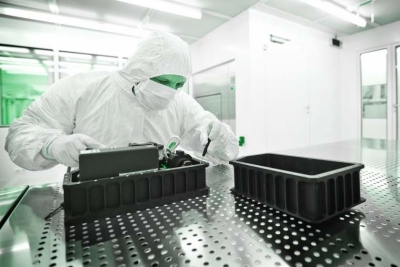
Cleanroom Classification
There are a lot of determining factors involved in choosing a cleanroom classification and every industry has a default standard to start with. In medical device packaging for instance, the default classification is ISO 7 (or a class 10,000) cleanroom.

Cleanroom Construction Materials
The question of modular versus conventional clean room construction is increasingly common in high-tech industries, and one that may have a different answer depending on each individual project. Speed to market, however, is critical for almost all manufacturing companies, and it’s particularly important for the pharmaceutical and biopharmaceutical industries, which need to maximize the patent protection period after what is usually a long and expensive product development cycle. It’s also crucial for the microelectronics industry where technology changes on a near-daily basis.

Construction Regulations and Standards
Any construction project, whether cleanroom-related or not, is subject to building codes. Regardless of construction technique, the overall objective of a building project is the same. The components of the clean room facility must satisfy local and national building regulations for fire protection and structural design. Materials are required to meet minimal flame and smoke development requirements (Class A non-combustible) or have fire separation walls (1- or 2-hour fire-rated for hazardous areas).
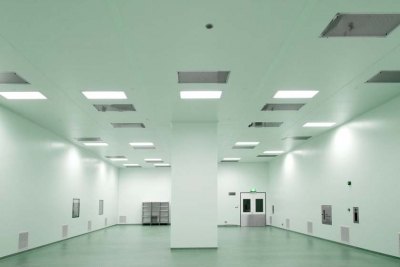
Case for Modular Construction
Modular clean room construction can offer a number of important advantages over conventional (stick-build) approaches. For example, modular walls are an inherently dry construction material with little or no modification required for installation, thus minimizing dust generation. Modular systems can also be manufactured from materials that are non-shedding and non-particulating.

Cleanroom Construction Process
While there are discrete steps in the design and construction of a cleanroom, those projects deemed successful incorporate certain practices that promote flow of the construction process toward completion on time and within budget. Proper front end planning is not completed until it results in appropriate values for design parameters; "buy-in" at all levels of management, and clear direction for the design phase. Engineering the cleanroom in accordance with recognized industry practice would produce construction documents that facilitate clear procurement and construction planning as well as a focused, efficient, construction effort. A full return on the energy expended through the construction phase cannot be realized without a well-executed start-up and certification process that provides baseline data for effective operation and maintenance. This paper describes the steps in the cleanroom design/construction undertaking and offers practical suggestions on how to avoid pitfalls along the way.

FRP/C-PVC Modular Cleanrooms
FRP and C-PVC Cleanrooms provide the ideal contamination-free processing environment for bio or pharmaceutical and other operations requiring an environment that's easy to clean and sterilize.

All-Steel Modular Cleanrooms
Double-wall modular steel cleanrooms are ideal for bio/pharmaceutical applications that require an easy-clean, aseptic environment. Completely free-standing, they require no external supports and can be specified and installed in a fraction of the time, at a fraction the cost, of conventional fixed-installation biopharmaceutical clean rooms.
Available in 304/316 stainless or powder-coated steel, these cleanrooms feature smooth internal surfaces without cracks or crevices that can harbor germ colonies. Clean room accessories include UV modules, air conditioning, humidification/dehumidification modules, and HEPA/ULPA fan/filter units (FFUs) to meet cleanliness requirements to Class 10/ISO 3.

Ceiling Grid Conversion System
Convert a existing office or room into an ISO class 4-8 cleanroom using Cleanroom Conversions a in a fraction of the time, and at a fraction of the cost, compared to new construction.
- Mounts to existing office walls
- Built to accommodate weight and dimensions of standard fan/filter units, lights and panels (order separately)
- Powder-coated or 304 stainless steel ceiling grid forms a strong, rigid structure—no ceiling suspension or internal support columns required for spans to 20 feet (6096 mm)
- Customized to your specifications
HVAC System
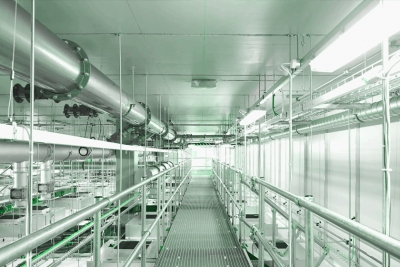
Heating, Ventilation and Air Conditioning Systems (HVAC). CLIN AC modules maintain the narrow temperature range required by garbed personnel and sensitive equipment inside a modular cleanroom.
Several configurations are available, with return air recirculated through Vertical Air Return modules mounted outside the cleanroom or directly through the cleanroom panels.

Barrier & Hardwall Panels
These versatile panels provide an economical way to divide a cleanroom or laboratory in multiple cleanliness zones or to create a dust-free area in an otherwise unclassified work space.
CLIN’s modular cleanroom panels serve as barrier walls that enable modification of existing space to multiple purposes.

The Aseptic Core
“The Aseptic Core” discusses scientific and regulatory aspects of aseptic processing with an emphasis on aseptic formulation and filling. This column has been developed to provide practical advice to professionals involved in the qualification of aseptic processes and the myriad support processes involved.

Cleanroom Design Phases
A typical cleanroom or aseptic facility design and construction process can be divided into several phases: planning, design, construction, commissioning, and qualification.
On completion of the qualification phase, a submission is prepared and submitted to one or more regulatory agencies for approval. On receipt of approval, the facility enters an operational phase in which product is manufactured for sale and routine quality controls are in place.

Points to consider for design
There is not a single “right” way to construct an aseptic processing facility or cleanroom, as each should be designed to accommodate the processes and products contained in the cleanroom. There are, however, general principles of design that should be followed in constructing a cleanroom or aseptic processing facility.
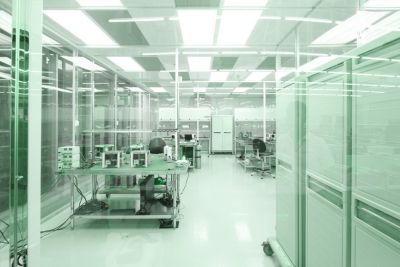
Cleanroom Qualifications
Qualification of an aseptic processing facility is a complex project including qualification of the cleanrooms in the facility, IQ/OQ/PQ of the equipment and utilities in the facility, airflow visualization studies, personnel training and qualification, aseptic process simulations, process validation, conformance runs, and other validation activities. This article focuses on the activities involved in certification and qualification of the cleanroom itself.

Cleanroom Compliance
One final item to discuss is the periodic tasks for demonstrating continued compliance of a cleanroom with ISO 14644 standards. These tasks include the following:

Common Contaminants
Once a cleanroom is built and activated, constant monitoring and maintenance are required. Equipment, tools, furniture, raw materials, outside air, people and even the type of garment worn by them will have to be examined for contamination risk before being allowed to enter. Specific conductivity material, antistatic characteristics, out gassing properties or even antimicrobial aspects may be required.

Entrance, Garment & Ante-rooms
A mistake often encountered in present day cleanroom facilities is the assumption that the garmenting area is not part of the cleanroom. This area is the transition point from the “dirty” to “clean”, which means the section leading into the cleanroom should be at least as clean as the cleanrooom itself.

Hand Hygiene
To understand different approaches for hand cleansing understanding of normal bacterial skin flora is essential. Normal human skin is colonized with bacteria. Different parts of the bodies have varied bacterial counts. In 1938 bacteria recovered from hands were divided into two categories, Transient and Resident.

Do’s & Don’ts of Glove Use
Grasp one of the gloves and cuff and pull it partway off. The glove will turn inside out. It is important to keep the first glove partially on your hand before removing the second glove.
Gowning Protocol
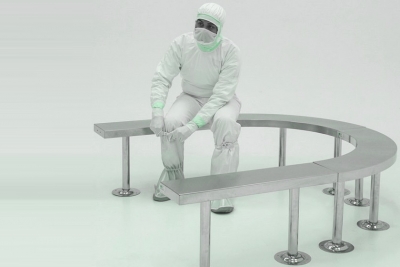
Garment should produce little or no particulate emission. This requires the fabric or material to be stable, possessing a high ability to resist breakdown.

Cleanroom Cleaning
Cleanrooms are highly controlled manufacturing areas designed to limit the amount of contamination. Federal standard 209E classifies cleanrooms by the concentration of air particles 0.5 micron in diameter or larger. (An average human hair is about 50 microns in diameter.)
A Class 1000 cleanroom, for example, has fewer than 1000 of these particles in a cubic foot of air, while a Class 10 cleanroom has fewer than 10 particles less than or equal to 0.5 micron in diameter per cubic foot.

Cleanroom Maintenance
Regular maintenance procedures-daily, weekly, monthly, and quarterly-help ensure cleanroom compliance, no matter what the cleanroom class. For example, positive-pressure air should be running at full-flow in a Class 10 cleanroom for at least 30 min before cleaning to ensure clean, fresh air within the room. Cleaning starts at the highest point and works toward the floor. Every surface, corner, and ledge are first vacuumed, then damp-wiped with a cleanroom wipe. Operators wipe surfaces one way-either downward or away from themselves-since a "back-and-forth" scrubbing motion can create more particles than it removes. They also use a clean surface of the wipe or sponge with every new stroke to guard against redeposition of contaminates. On walls and windows, the wiping movement must be parallel to the airflow.
Cleanliness Control
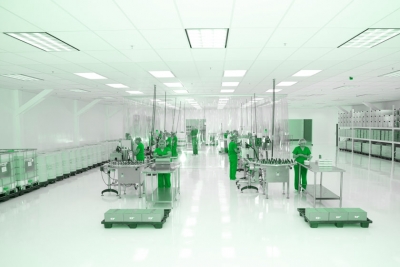
As with cleanroom operations, cleanliness is a four-part equation: environment, process, tools, and people. How stringent clean manufacturing guidelines need to be is based on the products and customer requirements.
Controlling air temperature and humidity levels in all work areas is a good first step in clean manufacturing. It may eliminate the need to open windows, which would admit outdoor airborne dirt.

The Bare Necessities
The supplies needed for cleaning a facility will vary according to the cleanroom’s classification and purpose, but there are certain materials that every facility should use.
Cleaning a home requires a collection of mops, vacuums, wipers, and cleaning agents. Similarly, cleanrooms require different tools for different cleaning tasks. Wipes and swabs clean small areas; mops are dedicated to larger surfaces. Cleaning solutions should be formulated to the task. Vacuum cleaners, non-shedding mops, and sticky rollers are other necessities.

Reduce Risk of Contamination
Contamination control is easier than detection because you cannot test for every impurity. Even if a product does not come in direct contact with the cleanroom environment, it is still influenced by it. Convection and circulating air can carry particulates and microbes, while handling can transfer residue. Thorough cleaning and disinfection of the environment minimizes the potential for contaminants to adversely affect product quality.

Clean Room Terminology
What is a Cleanroom?:
An enclosed area that’s controlled environmentally over atmospheric contamination, temperature, pressure and, often, humidity.
What is a Cleanroom Air Lock:
A room attached to the Cleanroom. This room has interlocking doors and its function is to act as a buffer zone between the cleanroom and the outside atmosphere, during the transfer of material or personnel. It helps keep the cleanroom pressurized and free from infiltrating dirt.