About The Author

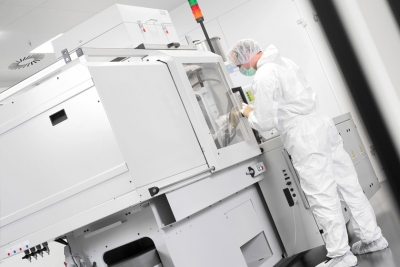
Maintaining a Cleanroom
Many industries from pharmaceutical, biotechnology, medical device, hospital pharmacies and medical disposables have clean room operations of differing sizes and complexities. Clients in these industries have recognized that there is a regulatory compliance to demonstrate clean room performance and controlled product bioburden with monitoring the environmental conditions in their aseptic manufacturing areas. Environmental Monitoring (E/M) is a program designed to demonstrate the control of viable (living microorganisms) and non-viable particles in critical areas. These areas include clean-rooms for drug fill/finish, formulation tank rooms, laminar flow hoods, biological safety hoods, isolators, glove boxes, molding machines, kit assembly lines, Intravenous (IV) compounding areas and sterile packaging. This article will discuss environmental monitoring from a viable particles perspective. Viable monitoring refers to testing for the detection and enumeration of bacteria, yeast and mold. It includes the monitoring of personnel, air and area surfaces for microbial contamination. And differs from non-viable environmental monitoring which is a reference for particle counts measured by a laser counter. Viable counts provide metrics on the potential for contamination of a company’s products as well as demonstrating the veracity that a clean room is functioning as designed and being properly maintained. Surface and air monitoring exhibit the asepsis of the product manufacturing operation.
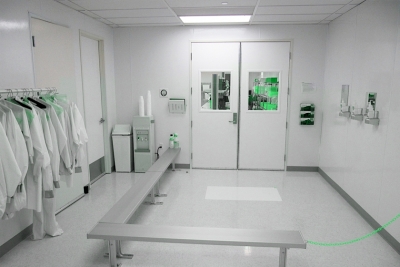
Why is cleanroom necessary?
In the high technological industries such as electronics, optical and biological industries, the newly developed commodities are manufactured with precise fabrication as a basic process.

Industrial & biological Cleanroom
Cleanroom is defined as “a specially constructed room in which the air supply, air distribution, dust and airborne particle, room pressure, temperature and humidity are environmentally regulated to meet appropriate cleanliness level”.

Dust & particles to be controlled
The dust and particles controlled in cleanroom are very small and invisible as shown below. Visible article is generally larger than 10 μm, which is removed out at the pre-filter stage. The cleanroom sub-micron particle, smaller than 1 μm, is the subject to control.

Comparison of contamination density
Let us compare the numbers of airborne particle or micro organism in cleanroom with our surrounding environment. The numbers of particles in general environment vary from time to time so that any fixed number cannot be determined, but roughly classified as shown in the diagram to the right. From this figure, you will see that such a clean condition in the highest class cleanroom cannot be found in the natural world, even in the upper area of stratosphere. Also, in the center of Pacific Ocean, the cleanliness level of the air is lower than that of middle class of cleanroom. In other words, cleanroom is an ultra clean space where airborne particles or micro organism are been eliminated, as we can never experience in our normal environment.

Application of Cleanroom
Industrial cleanroom is mainly applied in electronics industry standard for semiconductor manufacturing represented by IC/LSI. Furthermore, it extends its application in new material development and Fine Chemical Industry.