About The Author

HVAC vs conventional systems
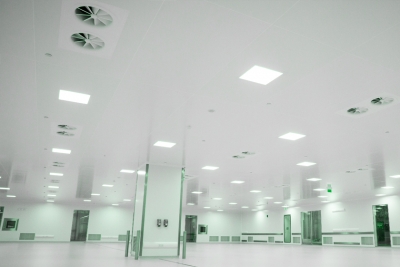
Clean room design encompasses much more than traditional temperature and humidity control. Design must consider aspects such as control of particulate, microbial, electrostatic discharge, gaseous contaminants, airflow pattern control, and pressurization and industrial engineering
Cleanroom Filtration Mechanisms
There are four basic mechanisms in which fibrous air filters remove contamination from the airstreams.
- Straining or Sieving: Particles larger than the clearances between fibers cannot pass through and are collected on the media.
- Inertial or Impaction: Particles due to their inertia leave the airstream’s around filters and impact the fiber directly. Adhesives usually retain the particles.
- Interception: Particles small enough follow the airstreams line around the filter fiber but are intercepted by the fiber due to the dimensions of the fiber and the particle.
- Diffusion: Particles are small enough and have sufficiently low mass so that air molecules, which are continually in motion and are bombarding the particle, cause the particle to acquire a vibration mode. Because of this vibration mode, the particles have a good chance of coming in contact with the fibers. The smaller the particle, the stronger this effect is. For large particles, over one micron in diameter, this filtration mechanism has virtually no effect.
Viable & Non-Viable Specs
There are differences across the major guidance documents regarding the limits for both viable and non-viable particulates. The ISO 14644-1 deals entirely with non-viable particulate sizes for various clean-room classifications. The European Commission Annex one and the United States Pharmacopeia focus on both viable and non-viable particulates within grades A (class 100), B (class 1000), C (class 10,000), and D (class 100,000). The tables below compare the guidance documents and help to display the inconsistencies between all the main clean-room classifications.
How Personnel are monitored
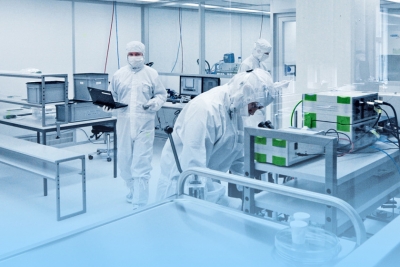
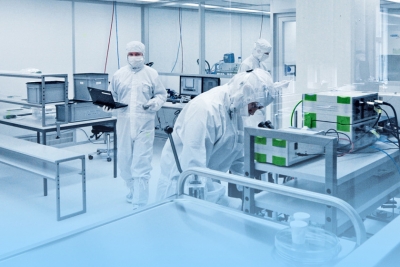
Personnel in critical areas may be monitored for microbial contamination utilizing contact plates. The contact plates monitor areas of the body that may interact with the sterile field or product exposure areas. These may include gloved hands, forearms, or other areas. Personnel monitoring is a good indication of how well personnel are gowning when they enter the clean room. Many companies utilize this testing for proficiency based training programs for clean room personnel.
Surface monitoring in Cleanroom
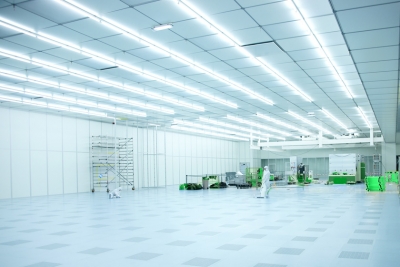
Contact Plates – as mentioned are special Petri dishes which contain sterile growth medium prepared in a manner so the surface of the media protrudes above the rim of the plate. The contact plate is pressed against any flat surface the needs to be sampled. Any viable microorganisms on the surface will stick to the agar surface and will grow upon proper incubation. This technique reveals the number of viable microorganisms on a surface.
Air sampling in Cleanroom
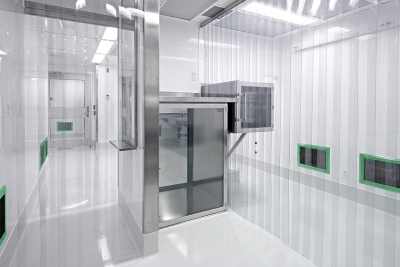
Air Samplers (active air sampling) – Air samplers draw in predetermined volumes of air. The air is drawn over a sterile media plate, which is later incubated to reveal the number of viable organisms per cubic feet or liter. Currently agar impaction is the method of choice throughout the industries. Using a specially designed, and calibrated piece of equipment which holds the media plate under a perforated lid and draws in a known amount of air one can accurately measure the amount of viable bacteria within the air.