About The Author


Choosing cleanroom ceiling system
Making a decision on ceiling systems, like the wall systems, is dictated by what your cleanliness classification is and what you’re worried about from a cleaning agent standpoint. But then you have to add one more factor to that, which is how much weight the ceiling will need to support.
Considering cleanroom doors
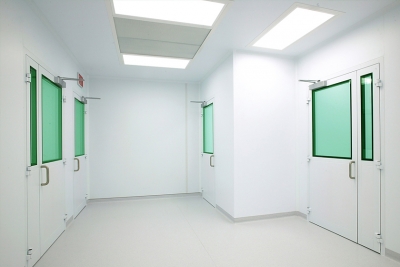
Cleanroom door selection is an interesting topic because from a cleanliness standpoint, the decisions are somewhat easy. In a pharmaceutical environment you’re concerned about cracks or crevices in the door and how microbial growth can result from that. But the decision process for a cleanroom door is more influenced by what you need from the entry and exit of people, personnel and materials, than on how a door relates to the cleanliness level.
Air flow systems design
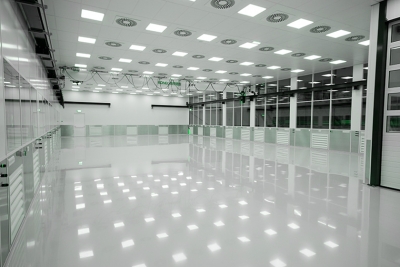
There are basically three different air flow systems in cleanrooms: pressurized plenum, ducted supply and ducted return, and ducted supply and open return. Pressurized plenum essentially means you pump the air into the plenum, push it through the filters and down on into the cleanroom. With a ducted supply and ducted return, you’re doing just that; you’re ducting the air delivered to the cleanroom and you’re ducting the air back out of the cleanroom. This last design is prevalent in a pharmaceutical cleanroom arrangement where you have to control the air. The most efficient from a cost and operational standpoint, is the ducted supply and open return. This involves ducting the air into the cleanroom though you let the air flow into an open return, which is essentially an return air plenum.
Application Guidelines
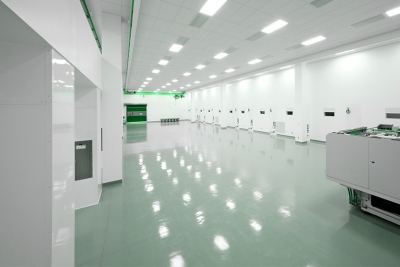
The industry differentiates between the cleanliness of rooms by referring to class numbers. Federal Standard 209E, “Airborne Particulate Cleanliness Classes in Clean Rooms and Clean Zones”, September 11, 1992, categorize clean rooms in six general classes, depending on the particle count (particles per cubic foot) and size in microns ( m). The first three classes allow no particles exceeding 0.5 microns (m), and the last three allowing some particles up to 5.0 microns.
Cleanroom Terminology
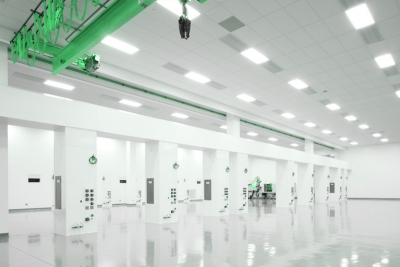
As-build - A clean room that is complete and ready for operation, with all services connected and functional, but without production equipment or personnel in the room.
Operational - A term used to describe a clean room in normal operation with all services functioning and with production equipment and personnel present and performing their normal work functions.
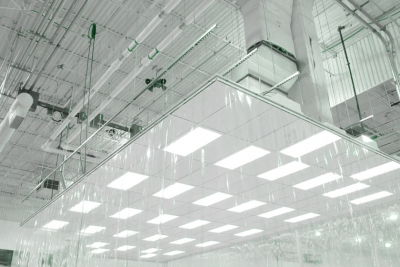
Cleanroom HVAC Systems
The 4 important air-conditioning design considerations for clean room system design are:
- Supplying airflow in sufficient volume and cleanliness to support the cleanliness rating of the room.
- Introducing air in a manner to prevent stagnant areas where particles could accumulate.
- Conditioning air to meet clean-room temperature, humidity and filtration requirements.
- Ensuring enough conditioned makeup air to maintain the specified positive pressurization.