About The Author

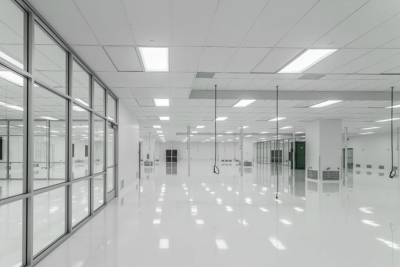
10 tips when considering a cleanroom
One of the common factors that makes all these inventions achievable is a clean environment provided by modular cleanrooms. A modular cleanroom construction is typically a freestanding, solid and robust structure that is suitable for use within an existing cleanroom, laboratory, manufacturing area or warehouse. A modular cleanroom uses off-the-shelf proprietary components to build a facility that meets the customer's exact requirements such as classification (ISO 14644-1), size, soft or hard wall (clear or opaque) and various lighting. As with all modular cleanroom providers there is a degree of consultation with the client to establish their desired criteria, the initial preparation paves the way to a smooth installation and a happy customer.
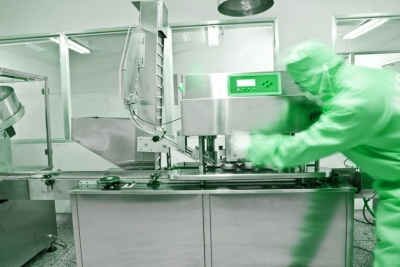
Who uses Cleanroom?
Cleanrooms sound like something out of a science fiction movie. A bright white room where employees wear scrubs, booties, and hair nets? Seems a bit like Westworld. Though they may seem like odd, sterile environments, cleanrooms are absolutely essential to the future of technology and industry. Their high-tech capabilities make it possible to create an environment that’s as free from contaminants and air particulate as possible.
If you have a cleanroom, or are interested in installing one for your application, you probably already know what a cleanroom is, but what you might not know is just how common they are. In a way, they’re the unsung heroes behind technological advancement. Most people don’t know that cleanrooms are actually very widely used in a variety of applications. In fact, you probably have more than a few things in your home or even on your person that were made with the help of a cleanroom. Basically anything you can think of that requires precise manufacturing requires a cleanroom. In fact, some of the most common cleanroom applications might surprise:
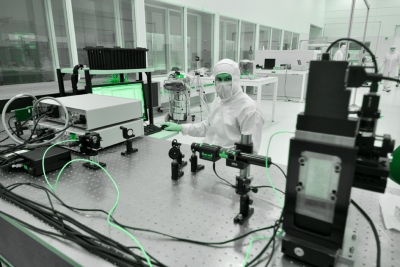
What Makes a Cleanroom a Clean Room?
Imagine if the medication we ingest and the electronic components we use were produced in rooms populated with chemical vapors, dust, and airborne particulates. These impurities would settle on capsules and circuits and contaminate them. Instead, manufacturers create a controlled environment a cleanroom to limit exposure to contaminants.
While not always sterile, a cleanroom follows accepted standards for maximum particulates per cubic meter. Air is filtered in and recirculated through HEPA air filters. Equipment is designed to generate minimal air impurities. Employees wear gloves, face masks, and head covers. Often, donning jumpsuits or smocks is also necessary. The room is cleaned daily, sometimes every few hours, according to rigorous quality procedures.
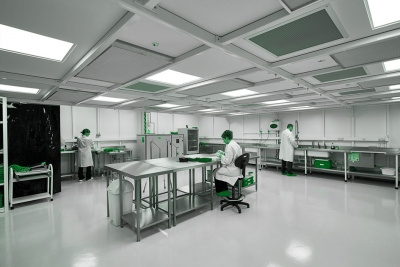
Definition of Cleanroom
A clean room (or cleanroom) is an enclosed space in which airborne particulates, contaminants, and pollutants are kept within strict limits. In industry, clean rooms are used in the manufacture and servicing of hardware such as integrated circuits ( IC s) and hard drive s. In biotechnology and medicine, clean rooms are used when it is necessary to ensure an environment free of bacteria, viruses, or other pathogens. In addition, the temperature and humidity may be controlled.

What is Cleanroom Notebook?
In order to perform their intended function, cleanrooms need to be specially cared for and maintained. Used in industries such as manufacturing, technology, and the sciences, cleanrooms are controlled environments where airborne particles, fumes, and other pollutants are kept at specific levels in order to avoid contamination.
Maintaining such an environment in a way that keeps it free of contamination requires the use of special clothes and equipment, including cleanroom notebooks and paper that are designed specifically for use in such sterile workspaces.
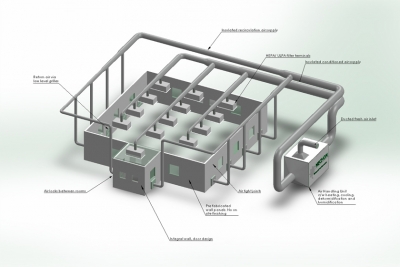
Cleanroom Design in Ten Easy Steps
"Easy" may not be a word that comes to mind for designing such sensitive environments. However, that doesn't mean you can't produce a solid cleanroom design by tackling issues in a logical sequence. This article covers each key step, down to handy application-specific tips for adjusting load calculations, planning exfiltration paths, and angling for adequate mechanical room space relative to the cleanroom's class.
Many manufacturing processes need the very stringent environmental conditions provided by a cleanroom. Because cleanrooms have complex mechanical systems and high construction, operating, and energy costs, it is important to perform the cleanroom design in a methodical way. This article will present a step-by-step method for evaluating and designing cleanrooms, factoring in people/material flow, space cleanliness classification, space pressurization, space supply airflow, space air exfiltration, space air balance, variables to be evaluated, mechanical system selection, heating/cooling load calculations, and support space requirements.