About The Author

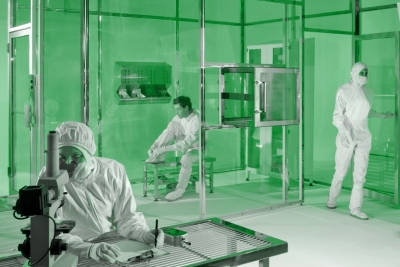
Better Cleanroom Construction
As the demand for complex cleanrooms in the life sciences grows, construction challenges mount. Making the right decisions during the building and commissioning phases of cleanrooms will help to ensure that they are successful, better integrated, more operable and sustainable. Generally speaking, teamwork among designers, operators, maintenance people and builders that focuses on project timelines will achieve the best results. The suggestions below will help drug and device manufacturers step back and better envision the whole facility during the build process.
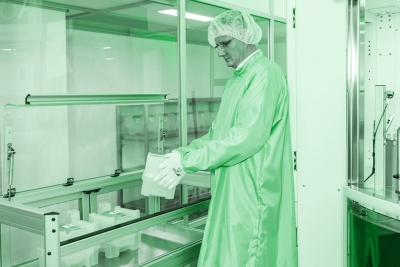
Clean Room Differential Pressure
In most large-scale FDA-regulated pharmaceutical manufacturing operations, it is required that the product be manufactured in a clean room classified between Class 100 and Class 100,000. In an operation where medical tubing is being extruded, the classification would likely be Class 100,000. In a process where inject-able drugs are being manufactured, the classification would most likely be Class 100 or Class 1000.
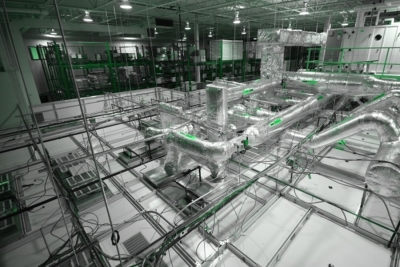
Cleanroom Air Flow Principles
Cleanrooms are facilities designed for conducting research or manufacturing products that require extremely clean environments. Typically, cleanrooms employ a broad range of techniques to prevent air particles, bacteria, and other contaminants from entering the workspace, often using an employee dress code and washing, pass-thru lockers and chambers, and intensive detail to cleaning. However, one of the major forces keeping a cleanroom particle free is the air filter system. Cleanrooms employ many different types of filters, including HEPA filters and ULPA filters, but there are two standard air flow patterns that are consistently used: laminar flow and turbulent flow.
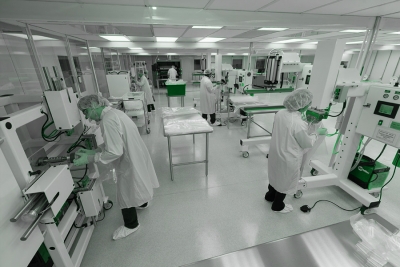
Cleanroom Particle Control
Cleanrooms are designed to minimise the ingress of airborne particles (achieved through HEPA or ULPA filters) and to control what happens to particles generated within the cleanroom. Good air flow design — such as turbulent flow — helps to prevent particles from being deposited onto surfaces (particles settle by two primary mechanisms: gravitational sedimentation and turbulent deposition)1. The removal of these particles is achieved through the extraction of room air with the addition of clean air into the room (air exchange rates). The flow of particles in air from a less clean area can also be blocked from entering an area of a higher cleanliness level through positive pressure differentials.
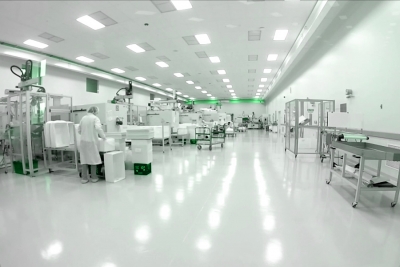
Bio-Pharmaceutical Cleanroom
The purpose of this guideline is to provide design and construction suggestions for cleanrooms housing bio-pharmaceutical processes. The following suggestions are intended to assume that the facilities, when used properly, will meet the airborne Particulate Classes for Cleanrooms and Clean Zones, and will provide an environment that does not negatively affect bio-pharmaceutical processes conducted therein. Air cleanliness within the cleanroom suite may range from Class 100 through Class 100,000. In addition areas may be considered clean or labeled as "controlled environment" without having cleanliness class assigned to the space.
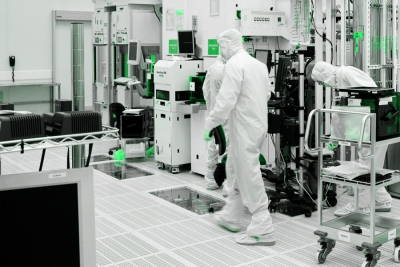
Cleanroom Ventilation
A well-designed cleanroom environment is necessary for activities performed in a controlled environment, containing a low level of pollutants—a critical requirement for many manufacturing, pharmaceutical, and scientific research applications. It has a controlled level of contamination, which is measured by the number of particles per cubic meter at a specified particle size. The ambient air outside in a typical urban environment contains 35,000,000 particles per cubic meter in the size range 0.5 µm or larger in diameter, which according to standards, is an ISO 9 cleanroom.